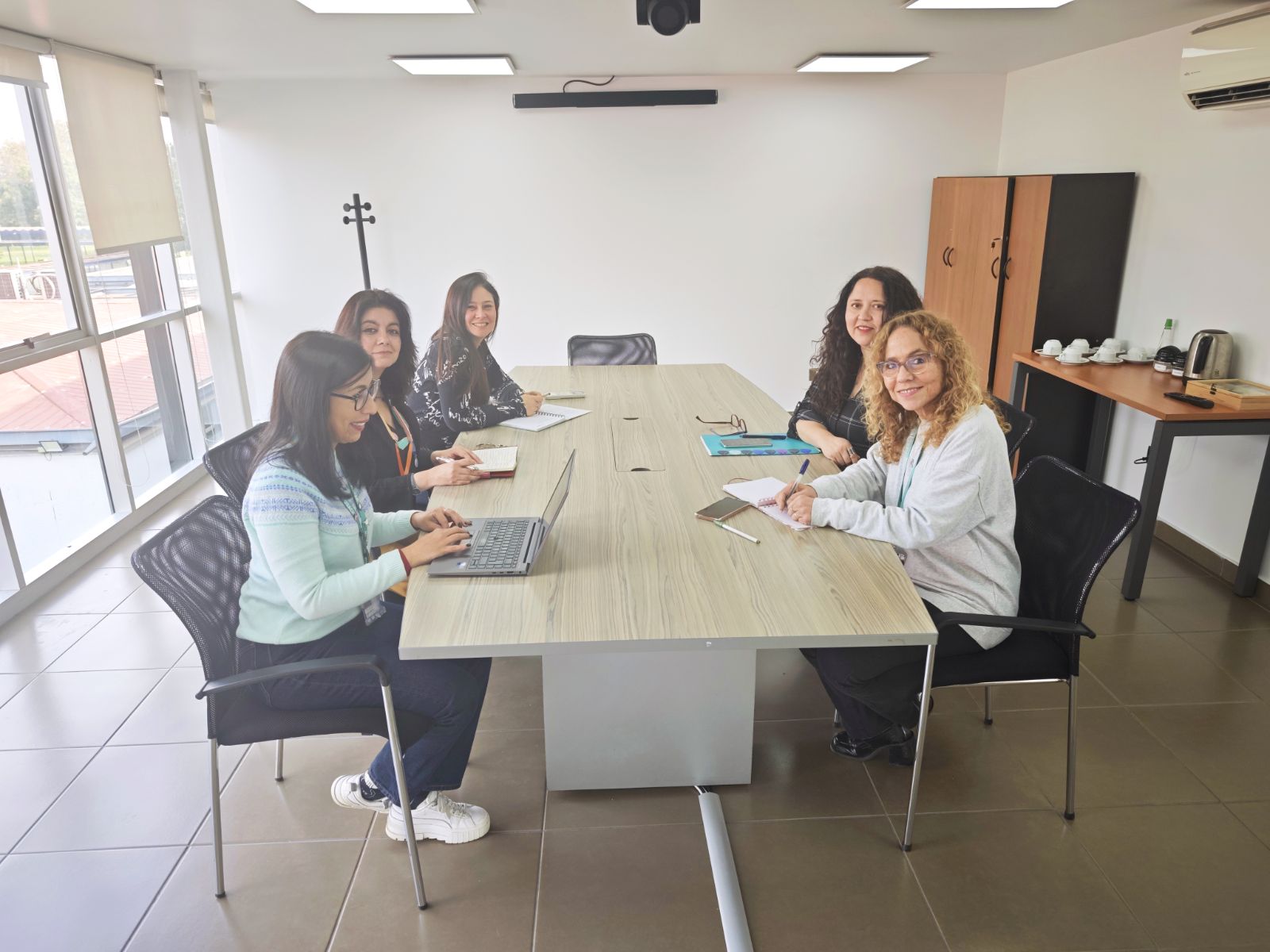
With the aim of strengthening the quality assurance system and consolidating continuous improvement across accredited doctoral and master’s programmes, the Vice-Rector’s Office for Graduate Studies at the University of Santiago of Chile is carrying out systematic work to update and monitor improvement plans in coordination with academic committees and programme directors.
Framed within its new “Protocol for Updating and Monitoring Improvement Plans for Graduate Programmes”, these sessions form part of an institutional strategy aimed at strengthening a culture of quality management, self-regulation and evidence-based decision-making. The initiative seeks to promote improvement plans as tools for the development and future direction of graduate programmes.
The protocol also establishes common guidelines for addressing the observations and challenges identified during programme accreditation processes conducted before the National Accreditation Commission (CNA), particularly in relation to the Internal Quality Assurance dimension and Criterion 5, which concerns self-regulation and continuous improvement capabilities.
To date, the programmes that have begun the updating process are the PhD in Chemistry, PhD in Microbiology, PhD in Food Science and Technology, PhD in History, Master’s in History, Master’s in Economic History, Master’s in Food Technology and Master’s in Engineering Sciences, specialising in Electrical Engineering.
The work involves technical meetings, the review of accreditation observations, the analysis of weaknesses and opportunities for improvement, and the updating of strategic actions aimed at strengthening the academic, curricular and management dimensions of the programmes. It also includes monitoring progress and gathering supporting evidence. This work has been led by the Quality Assurance team at the Vice-Rector’s Office for Graduate Studies, comprising Evelyn Sanzana and Fernanda Véliz, with the support of the Curriculum area, led by Daniela Bertholet, the Internationalisation area, coordinated by Carol Johnson, and the Strategic Communications area, led by Daniel Campos.
Dr Brenda Modak, Director of Academic Graduate Programmes, highlighted the importance of this ongoing support:
“It is essential to maintain close and ongoing contact with academic staff in order to strengthen actions that contribute positively to the development of programmes, align their management with the criteria assessed by the CNA, and facilitate the collection of data and evidence demonstrating progress in their accreditation processes.”
Dr Modak emphasised that, while part of this work systematises the actions undertaken by the academic teams of each programme to demonstrate compliance with the criteria and standards established by the CNA, the core focus of the work carried out by the Quality Assurance area of the Vice-Rector’s Office for Graduate Studies is to contribute to long-term institutional strengthening by consolidating programmes and fostering coordination and integration, with the aim of addressing the current challenges of graduate education.